
Take It To the Streets
During this Pentecost season, we should learn from the disciples who left behind fear and took their faith into the streets.
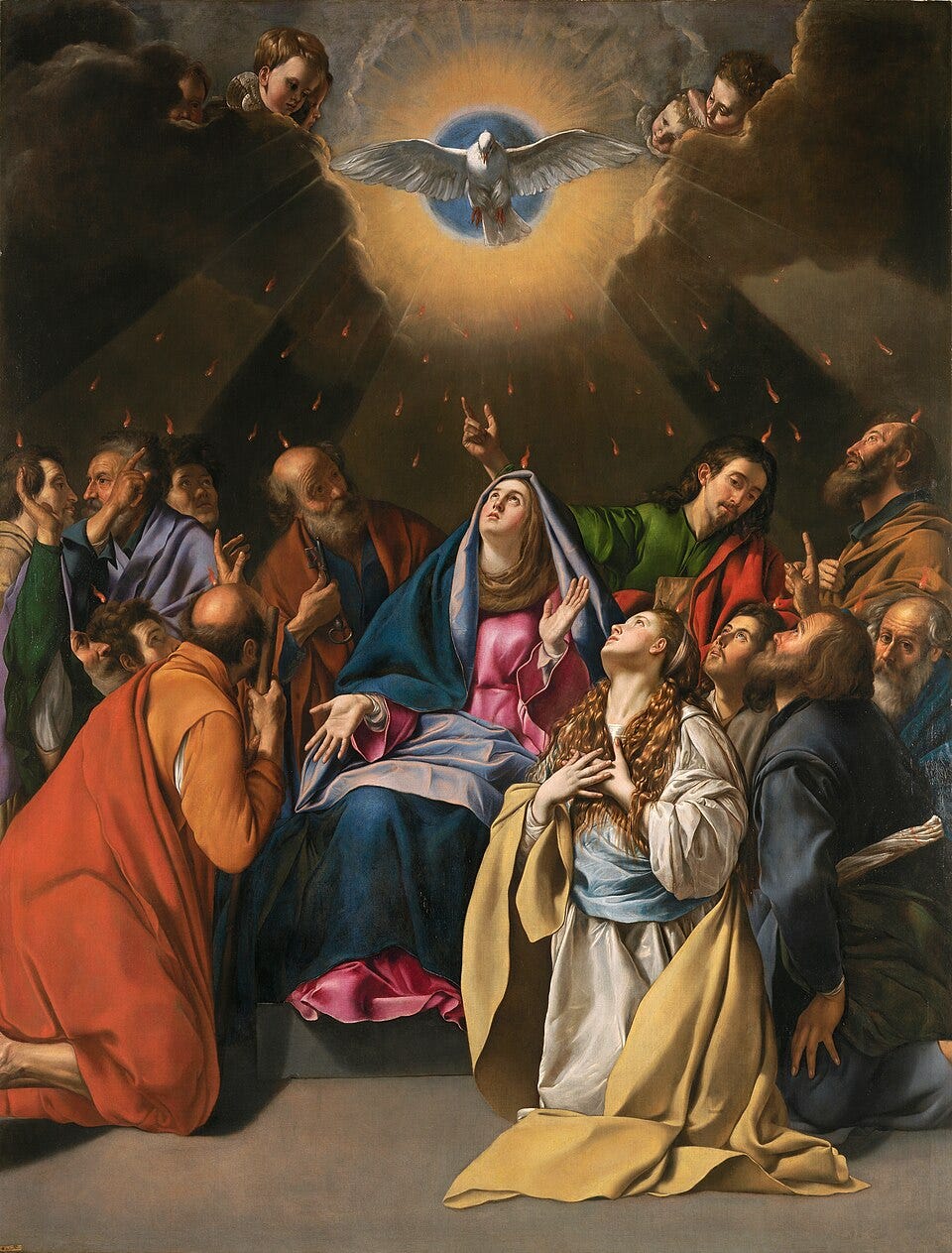
Last weekend, Christians around the world celebrated Pentecost Sunday, commemorating the coming of the Holy Spirit to the earliest followers of Jesus after his resurrection. Pentecost is often thought of as the birth of the church, as it was the moment the disciples stopped hiding in fear and stepped into public witness.
“When the day of Pentecost came, they were all together in one place. 2 Suddenly a sound like the blowing of a violent wind came from heaven and filled the whole house where they were sitting. They saw what seemed to be tongues of fire that separated and came to rest on each of them. All of them were filled with the Holy Spirit and us to speak in other tongues as the Spirit enabled .” (Acts 2:1-4)
A crowd heard the sounds and the different languages, came together in “bewilderment” and were “utterly amazed.” They asked each other “What does this mean?” Some just thought these Galileans were just drunk. But Peter, with the other disciples, no longer in hiding now, went to the streets to address the crowd and “explain” to them what was happening. He spoke of the meaning of Jesus in biblical history, and said what is now happening was spoken by the prophet Joel:
“I will pour out my Spirit on all people.
Your sons and daughters will prophesy.”
The original Pentecost would raise up the lives and voices of everyone: old people and young people, men and women (Acts 2:17-18). It was an egalitarian uprising of the Spirit that had long been biblically prophesied. This was God’s plan, carried out now in Jesus and all those who would follow him. And the multiple languages spoken meant this was not just for the Jews, but for people everywhere.
The no longer fearful Peter proclaimed “God has made this Jesus, whom you crucified, both Lord and Messiah. When the people heard this, they were cut to the heart and said to Peter and the other apostles, ‘Brothers, what shall we do’ “? (Acts 2:36-37) Peter called upon them to “Repent and be baptized, every one of you, in the name of Jesus Christ for the forgiveness of your sins. And you will receive the gift of the Holy Spirit… Save yourselves from this corrupt generation.” (Acts 2:38-41)

The Book of Acts goes on to describe how these early Christians came together, broke bread in their homes with one another, gathered publicly, devoted themselves to the teachings of Jesus and the apostles, going as far as selling and sharing their property and possessions so that “there was not a needy person among them.” The poor were welcome among them, and their numbers grew daily. This was the birth of the church, and the model for the earliest disciples of Jesus.
What does it mean to take the message of Jesus into the streets today, beyond the walls of our churches and into the public square?
When I was at Sojourners, we often convened a “Peace Pentecost” centered on the moral crises that demanded a public gospel witness. I recall one Pentecost action I helped lead with Richard Rohr and Rev. Timothy MacDonald from Atlanta, we had brought together almost 1000 people of faith to protest the rapidly escalating nuclear arms race at the Capitol Rotunda and 286 of us were arrested for civil disobedience. Pentecost is not just a day on the church calendar, but a liturgical season that calls us outward. Many of us are already taking the gospel message to the streets and will continue to do so this Pentecost season, and I encourage all to explore ways to do so if you haven’t already:
There is a moral need for all Americans, white Americans in particular, to show up in solidarity with Black Americans and Black led protests as the current administration continues to destroy the Voting Act of 1965 and more. As multi-racial people of faith, we should stand in their way, and Pentecost is a good time.
We can commit ourselves to protect free and fair elections this upcoming November, as efforts to undermine democratic processes and suppress participation increase. People of faith should get involved in this work by signing up to attend training and serve as a Poll Chaplain or Peacekeeper with Faiths United to Save Democracy (FUSD). And I encourage you to support local nonpartisan efforts to expand voter participation.
We can and should also continue to oppose and disrupt mass deportation efforts targeting immigrants of color, both in public and behind the scenes in neighborhoods where people need practical support and accompaniment. If they decide to go all in to deport immigrants of color in another big city, we should go all in too and protect our neighbors.
We should refuse to be silent in the face of the unjust war in Iran that has brought mass civilian suffering and destruction of human life. War crimes against civilian infrastructures and continued Trump references to genocide must lead faith communities to take to the streets in protest.
Pentecost began when frightened disciples left a locked room and entered the streets with courage. This season invites us to preach the gospel from our pulpits while also bringing congregations into the street, visibly supporting town halls, peaceful protests, and local movements for justice and democracy. Just like the Holy Spirit called the disciples to public witness, we must ask ourselves where faithful people are needed most. Let our Pentecost prayer be one that tells us when, where, and how we should show up.
Thank you for explaining Pentecost in layman terms so people can understand what happened thousands of years ago on that important day! Thank you again for a very good post!
In my email, the Acts 2:1-4 quote has an addition of being filled with a wholly undefined and unholy "and us" of hackers!
"Holey moley!" Holey socks!! Wholly worms! Wholly illogical and illogically-directed maggots!
“When the day of Pentecost came, they were all together in one place. 2 Suddenly a sound like the blowing of a violent wind came from heaven and filled the whole house where they were sitting. They saw what seemed to be tongues of fire that separated and came to rest on each of them. All of them were filled with the Holy Spirit and us to speak in other tongues as the Spirit enabled .” (Acts 2:1-4)
One true translation of verse 4 reads "All of them were filled with the Holy Spirit and began to speak in other languages as the Spirit gave them ability."
The Holy Spirit is what we need, and no added "us" things!